
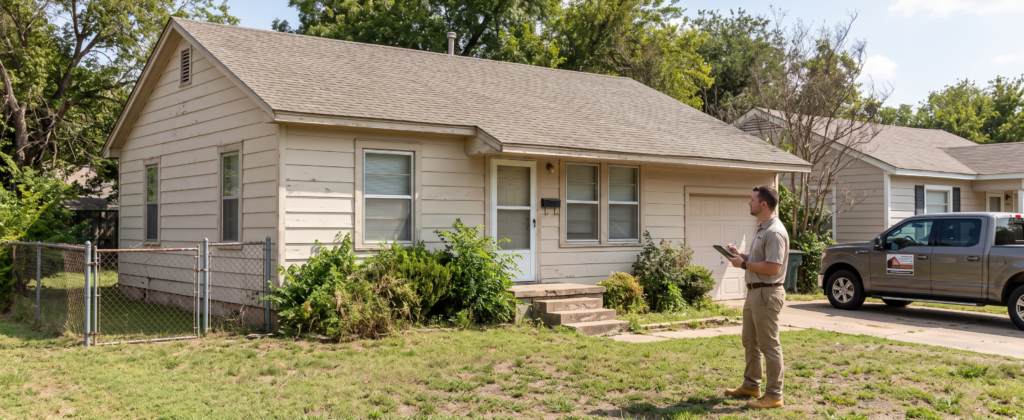
Buying a foreclosure in Fort Worth can look like an opportunity to purchase real estate at a discount.
But a foreclosure isn’t automatically a good deal.
The purchase price is only one part of the equation. The property’s condition, title, repairs, financing, holding costs, auction rules, and your exit strategy can all determine whether the numbers actually make sense.
And buying a property at a foreclosure sale is very different from buying a traditional house—or even buying a bank-owned property that’s already gone through foreclosure.
Before you bid or make an offer, here are seven things to understand.
1. “Foreclosure” Can Describe Different Stages of a Property
One of the first things to understand is that not every property described as a foreclosure is being sold the same way.
A property might be approaching a foreclosure sale, offered at a trustee sale, or already owned by a lender after the foreclosure process has been completed.
Those situations can involve very different purchasing processes.
For example, a bank-owned or REO property may eventually be marketed for sale more like a conventional property.
A trustee sale is different.
In Tarrant County, mortgage foreclosure sales are generally conducted by a trustee acting on behalf of the lender.
So before analyzing the deal, determine exactly what you’re buying and how it’s being sold.
That affects everything from your due diligence to your financing and closing process.
2. Understand How Foreclosure Sales Work in Tarrant County
Don’t treat a foreclosure auction like an ordinary home purchase.
Tarrant County explains that mortgage foreclosures are generally nonjudicial and that substitute-trustee sales are held on the first Tuesday of each month. The individual foreclosure notice identifies the applicable sale time.
Texas law also generally requires notice of a foreclosure sale to be posted, filed with the county clerk, and mailed to the debtor at least 21 days before the sale.
If you’re researching upcoming foreclosure sales, start with the official Tarrant County foreclosure information and sale notices
Then read the actual notice and applicable sale terms carefully.
The county explains that its clerk’s office does not provide the specific purchasing requirements for mortgage foreclosure sales. Questions about a particular sale should be addressed through the trustee conducting it.
Important: Mortgage foreclosure sales and delinquent property-tax sales are not necessarily the same process. Don’t assume rules you read for one automatically apply to the other.
For the underlying statutory requirements, review Texas Property Code §51.002
3. Don’t Assume You’ll Get the Same Due Diligence as a Traditional Buyer
When you buy a house through a normal retail transaction, you may have time to tour the property, obtain inspections, negotiate repairs, review disclosures, arrange financing, and complete title work before closing.
A foreclosure purchase may not give you that same experience.
Access to the property and the opportunity to inspect can depend on how the property is being sold.
That makes it especially important not to base your maximum purchase price on the assumption that the house only needs cosmetic improvements.
Before bidding, consider what happens to your numbers if the property needs major work involving things such as:
- Foundation
- Roof
- HVAC
- Plumbing
- Electrical systems
- Water or fire damage
- Flooring and drywall
- Windows
- Exterior repairs
- Landscaping
- Trash or personal-property removal
If you can’t adequately determine the condition beforehand, build that uncertainty into your investment analysis.
A low purchase price can stop looking low very quickly when major repairs appear after the purchase.
If you’re evaluating a property with substantial deferred maintenance, read our guide to the best way to sell a house that needs repairs
It explains many of the condition issues that can affect an as-is property.
4. Research the Title Before You Bid
The physical condition of a foreclosure isn’t the only potential source of surprises.
The property’s title deserves careful attention too.
Don’t simply assume that purchasing a property through foreclosure means every possible title issue, lien, tax obligation, or other claim disappears.
The effect of a foreclosure on particular interests can depend on the type of lien, priority, the foreclosure itself, and the specific facts surrounding the property.
Before committing money, consider working with an appropriate title professional and, when necessary, a Texas real-estate attorney to understand what you’re buying.
Research may include:
- Ownership records
- Recorded liens
- Property taxes
- HOA-related matters
- Judgments
- Other recorded interests
- The deed of trust and foreclosure documents
- Whether there are occupants or other possession issues
Tarrant County’s official real-estate records can be useful during this research.
The important point is simple:
Don’t let an attractive auction price replace proper due diligence.
5. Calculate the Entire Investment—Not Just the Winning Bid
Suppose you purchase a property for less than similar renovated homes in the neighborhood.
That doesn’t automatically mean you bought it below market value in a way that produces a good investment.
Your real cost can include much more than the acquisition price.
Depending on the property and your strategy, you may need to account for:
- Acquisition costs
- Repairs and renovation
- Cleanout
- Insurance
- Property taxes
- Utilities
- Financing costs
- Interest
- Lawn and property maintenance
- Security
- HOA expenses
- Permits
- Holding costs
- Closing costs
- Selling expenses
Then account for uncertainty.
What happens if the renovation costs 15% more than expected?
What happens if it takes longer to complete?
What if your expected resale price is too aggressive?
What if the rental income is lower than projected?
Run the deal using conservative assumptions instead of relying only on the best-case scenario.
6. Bank-Owned Properties and Foreclosure Auctions Aren’t the Same Purchase
An REO or bank-owned property is generally a property the lender took ownership of after foreclosure.
That can create a different buying experience from purchasing at the foreclosure sale itself.
Depending on how an REO property is marketed, buyers may have more opportunity to evaluate the property through a more conventional offer and closing process.
But that doesn’t mean an REO property is automatically safe, cheap, or profitable.
The same basic investment rules still apply:
Know the condition. Know the title. Know your costs. Know your exit strategy.
And don’t assume a property’s foreclosure history automatically makes the asking price a bargain.
Compare the property against relevant sales, its current condition, realistic repair costs, and your intended use before deciding what it’s worth to you.
7. Know Your Exit Strategy Before You Buy
The time to decide what you’ll do with a property isn’t after you’ve won the bid.
It’s before.
Ask yourself:
Am I buying this property to renovate and resell it?
Do I intend to hold it as a rental?
How much work does that strategy require?
What is my realistic after-repair or stabilized value?
How long could I afford to hold the property if the project takes longer than planned?
What happens if my original plan doesn’t work?
A property that makes sense as a long-term rental may not make sense as a flip.
Likewise, a property with a potentially strong resale value may still be a poor investment if the renovation budget, financing costs, and holding period consume the expected margin.
The foreclosure label isn’t what makes the investment work.
The numbers do.
Where Can You Find Fort Worth Foreclosure Sale Information?
For properties in Tarrant County, start with the Tarrant County Clerk’s foreclosure resources
The county provides information about substitute-trustee sale notices and directs users to its Official Records Search for foreclosure notices.
You can also review Texas Property Code §51.002 when researching the basic statutory foreclosure-sale process
Remember that government offices generally can’t evaluate an investment for you or provide legal advice about whether you should purchase a particular property.
Use official records as part of your due diligence—not as a substitute for professional advice when you need it.
What If You’re the Fort Worth Homeowner Facing Foreclosure?
You may have landed on this page for a completely different reason.
Maybe you aren’t trying to buy a foreclosure.
You’re worried your own house could become one.
If you’re behind on mortgage payments or you’ve received a foreclosure notice, the decisions you face are different from those of an investor trying to buy the property.
Texas foreclosure timelines can move quickly.
Texas law generally requires a residential borrower covered by the statute to receive at least 20 days to cure a default before the notice of sale is given, followed by the applicable sale-notice requirements.
But foreclosure situations vary by loan and circumstances.
If you’re dealing with missed payments, contact your mortgage servicer promptly and learn about the options that may be available to you.
You can also read our guide to what Fort Worth homeowners can expect during the foreclosure process:
What Fort Worth Homeowners Can Expect During the Foreclosure Process
It explains the foreclosure process from the homeowner’s side.
And if selling the property is one of the options you’re considering, read how cash home buyers work in Fort Worth:
That will help you compare selling directly to a cash buyer with other ways of selling the property.
WORRIED ABOUT A POSSIBLE FORECLOSURE?
Find Out What Your Fort Worth House Could Sell For As-Is
If you’re considering selling instead of continuing through the foreclosure process, find out what an as-is sale could look like before making your decision.
Oak Summit Group buys houses in the Fort Worth area in as-is condition.
You don’t have to make the house perfect before talking with us.
No obligation to accept the offer.
Frequently Asked Questions About Buying Foreclosures in Fort Worth
When are foreclosure sales held in Tarrant County?
Tarrant County states that substitute-trustee foreclosure sales are held on the first Tuesday of each month. The applicable foreclosure notice provides the sale time and other information for that property.
Where can I find foreclosure notices in Fort Worth?
Start with Tarrant County’s official foreclosure resources
The county directs the public to its Official Records Search for notices of substitute-trustee sales.
How much notice is required before a Texas foreclosure sale?
Texas Property Code §51.002 generally requires at least 21 days’ notice of the sale through the statutory posting, filing, and mailing process.
Other notice requirements can apply depending on the property and circumstances.
Can I inspect a foreclosure before buying it?
Don’t assume you’ll always have the same inspection opportunity you’d receive in a traditional transaction.
Property access and due-diligence opportunities can differ depending on whether you’re buying at a foreclosure sale or purchasing a property later as an REO or bank-owned home.
Are bank-owned houses safer investments than foreclosure-auction properties?
They’re different—not automatically safer or more profitable.
A bank-owned property may be sold through a more conventional process, but buyers should still investigate the condition, title, repair budget, purchase price, and exit strategy.
Are foreclosure properties always cheaper?
No.
The word “foreclosure” by itself doesn’t tell you whether a property is a good value.
Analyze the acquisition price together with repairs, title considerations, financing, carrying costs, selling costs, and realistic resale or rental value.
What should I research before bidding on a foreclosure?
At minimum, understand the property’s sale process, condition to the extent you can determine it, title and public records, estimated repairs, total acquisition and holding costs, and your intended exit strategy.
For legal or title questions, consult an appropriate professional.
Buying a Foreclosure Can Create Opportunity—but Due Diligence Comes First
Buying foreclosures in Fort Worth can create investment opportunities, but the foreclosure label alone doesn’t make a property a bargain.
Understand how the property is being sold.
Research the title.
Estimate repairs conservatively.
Calculate the entire investment.
And know what you plan to do with the property before committing your money.
If you’re researching foreclosure because your own Fort Worth house may be facing foreclosure, you have a different decision to make.
If selling is one of the options you’re considering, Oak Summit Group can talk with you about selling the property as-is.
Worried About Foreclosure? See What Your Fort Worth House Could Sell For As-Is
You don’t have to start making repairs or preparing the house for traditional showings just to find out what another option could look like.
Get a no-obligation cash offer from Oak Summit Group and compare it with your other options before deciding what makes sense for you.
Or call (817) 381-2181 to talk through your property and selling options.
No obligation to accept the offer.